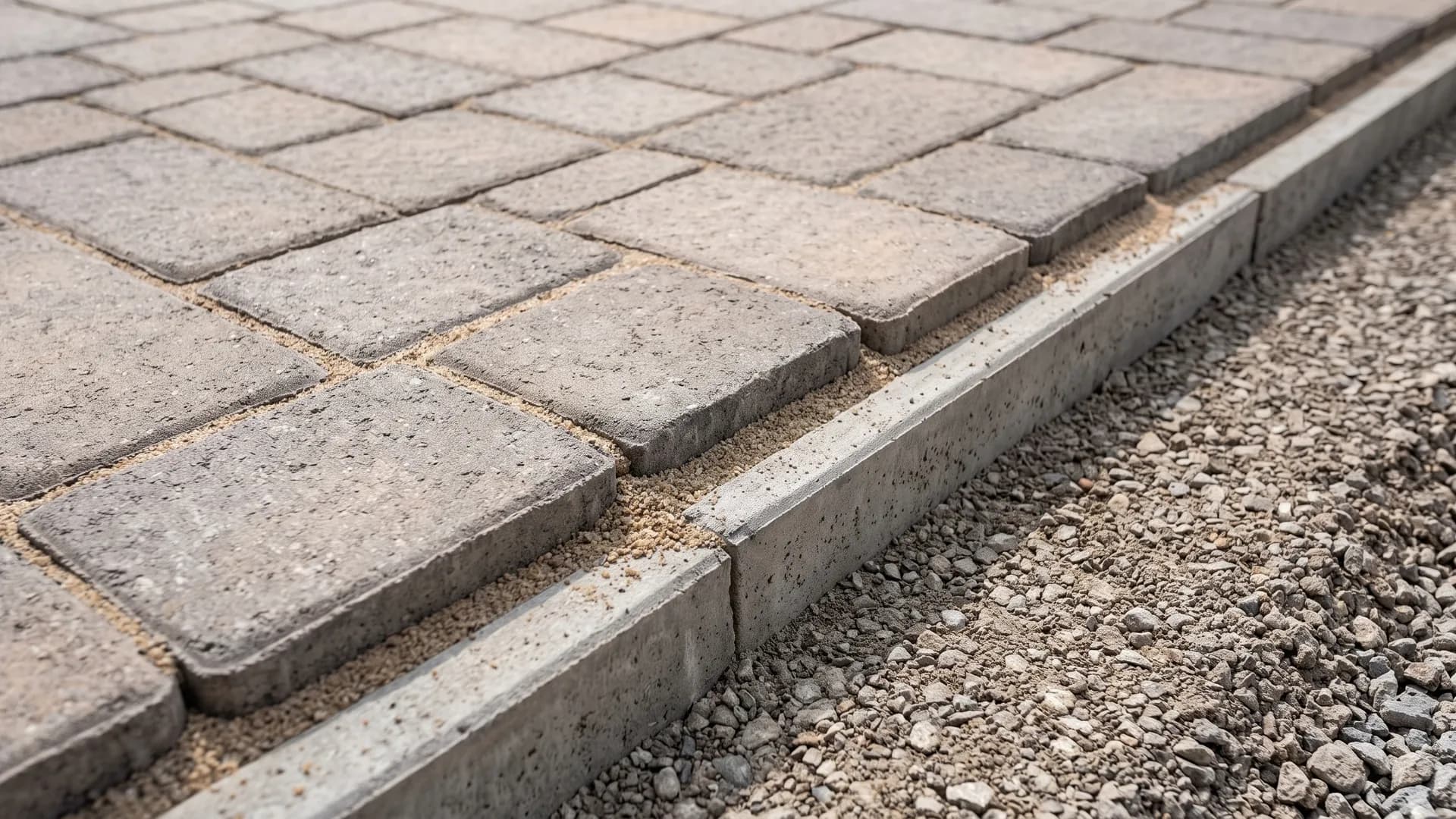

When people picture a beautiful paved driveway, they picture the stone, the colour, the pattern and the crisp border framing it all. Almost nobody pictures the several inches of compacted gravel underneath it, and that is exactly the problem. The interlocking driveway base is the single most important part of the entire structure, and it is the one part no one will ever see. Get it right and the driveway lasts for decades without complaint. Get it wrong and no amount of handsome stone laid on top will save it from the ground working against it.
This is the least glamorous subject in all of landscaping and quietly the most important one on the whole property, so it is worth understanding exactly why it carries so much weight and why cutting it is the most expensive saving a homeowner can make.
The Base Does the Real Work
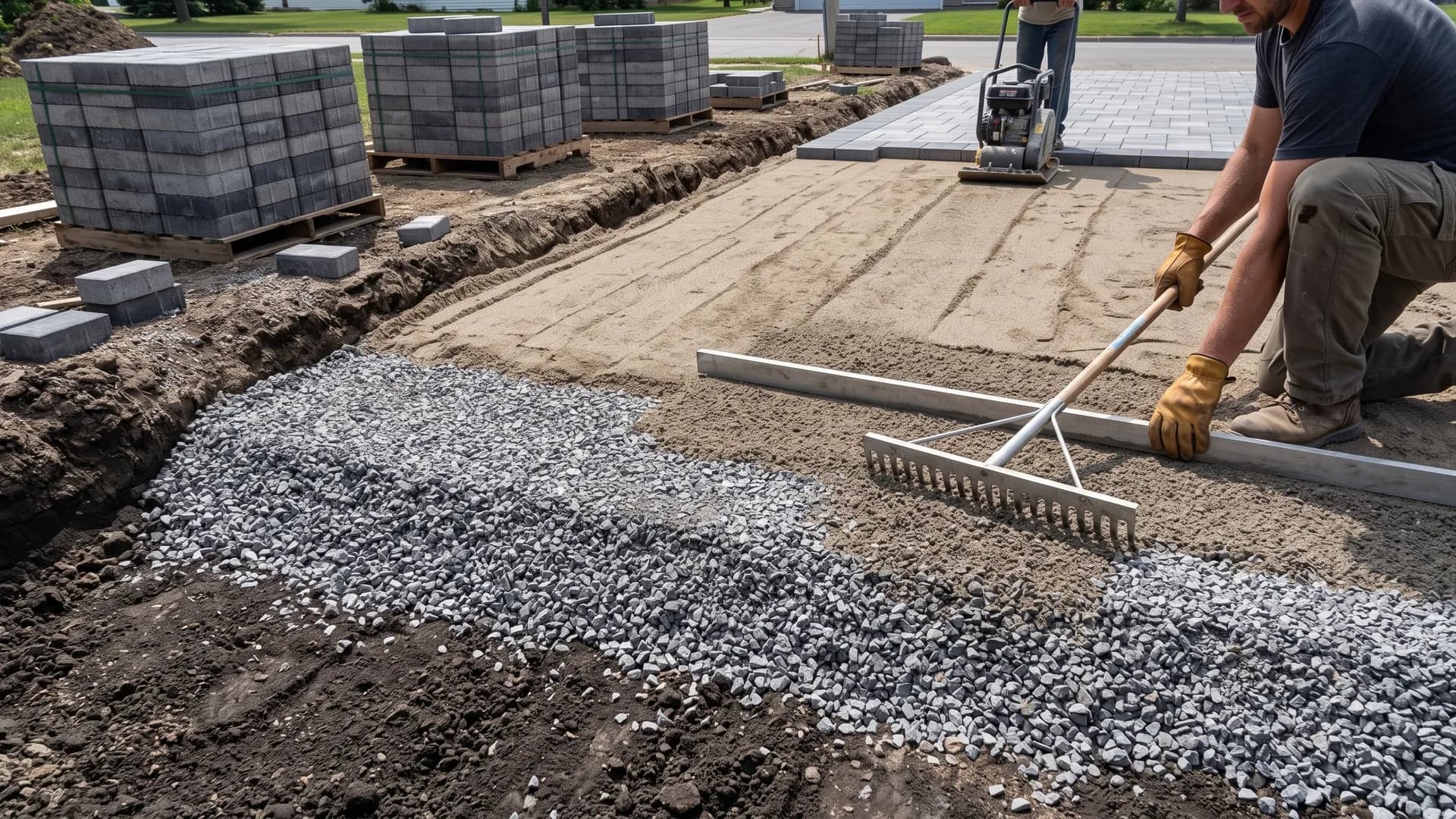
The pavers on top are the finish, not the structure. Every vehicle that ever parks on the driveway, every delivery truck, every load, is carried not by the stone but by the compacted granular base beneath it. The interlocking driveway base spreads those loads across the ground so that no single point is overwhelmed, which is what keeps the surface flat and even year after year.
A base built to the correct depth and compacted properly behaves like one solid, stable layer that moves as a single unit rather than shifting in patches. A base built too thin or compacted carelessly does not, and the driveway above it begins to reflect every weakness underneath, settling into ruts and low spots that only worsen with time. This is why the base is the first and most consequential decision in any interlocking driveway, long before the stone is even chosen.
Managing Water Below the Surface
The base does a second job that matters just as much in our climate, and that is managing water. A properly built base and grade let water drain away rather than pooling beneath the pavers, and in a region of hard freezes that drainage is everything. Water trapped under the surface freezes, expands, and lifts the driveway from below, and it does it again every March until the field cracks and heaves.
This is where depth and drainage become inseparable. A base that both carries the load and sheds the water is what allows a driveway to survive freeze and thaw intact, which is the same principle we explain in our guide to drainage and grading. A driveway is a drainage structure as much as a driving surface, and the base is where both of those functions quietly live, out of sight and doing all the real work.
Why the Base Is the First Thing Cut
Here is the uncomfortable truth about the interlocking driveway base. Because it is invisible in the finished result, it is the easiest place for a cheap installation to save money, and the hardest place for a homeowner to check. A driveway with a thin base looks absolutely identical to a driveway with a proper one on the day the work is finished.
The difference only appears later, one winter at a time, as the underbuilt driveway begins to settle and spread while the properly built one stays flat. This is why a suspiciously low quote so often hides a shallow base, and why spending the budget underground rather than on decorative complexity is almost always the wiser choice. You can see the difference that proper foundations make across our completed projects, where the driveways still sit true years after they were laid.
Building on Something That Lasts
The lesson is simple and worth repeating, because it runs against instinct. When you invest in a paved driveway, the money that matters most is the money spent where you will never see it. A generous, properly compacted, well drained interlocking driveway base is what turns an attractive surface into a lasting one, and it is the truest measure of whether a driveway was built to endure the winters ahead or merely to impress on the single day the photographs were taken.
Ask any contractor how they build the base, to what depth and with how much compaction, before you ask a single question about the colour of the stone, and treat a vague or dismissive answer as the warning it plainly is. If you want a driveway built from the ground up to last, starting with a foundation that will still be true in fifteen years, tell us about your project.