A paved driveway is one of the few home improvements that looks identical on its first day whether it was built brilliantly or built badly. The stone is the same, the pattern is the same, the photograph is the same. The difference only surfaces later, one winter at a time, and by then it is expensive to fix. Almost every one of the common interlocking driveway mistakes is invisible on installation day and unmistakable three years on.
Knowing where those failures come from is the best protection a homeowner has, whoever ends up doing the work, because a well informed client asks the questions that quietly separate a careful builder from a careless one. Here are the ones we see most often, and how a careful build sidesteps each of them.
The Base Built Too Thin
The single most common failure lives entirely underground. The finished stone is only the surface, and beneath it sits a compacted granular base that carries every vehicle the driveway will ever hold. Cut that base too shallow, or skip the compaction that binds it, and the driveway begins to settle and heave within a few winters no matter how perfect the pavers on top may look on the day it was finished.
A driveway carries far heavier loads than a patio and needs a deeper, properly compacted base to match, which is precisely the corner an inexperienced or rushed installer is most tempted to cut. We excavate to the depth the load actually requires and compact in layers rather than all at once, because a base compacted in a single pass looks finished but never achieves the density that carries weight over time. That patience underground is where a driveway either earns its decade or loses it. Everything else about a good interlocking driveway depends on getting this first invisible step right.
Ignoring Water and Grade
The second great category of interlocking driveway mistakes is water. A driveway that does not shed water properly traps it beneath the surface, where our freeze and thaw cycle turns it into a slow wrecking machine, lifting and cracking the field from below every March.
Correct grading sends water away from the house and off the driveway rather than letting it pool or run back toward the foundation. Poor drainage is behind a surprising share of failed driveways, and it is never fixed by the stone on top, only by the grade and the base beneath it. The same principles we cover in our guide to drainage and grading apply directly here, because a driveway is a drainage structure as much as a driving surface.
Skipping Edge Restraint
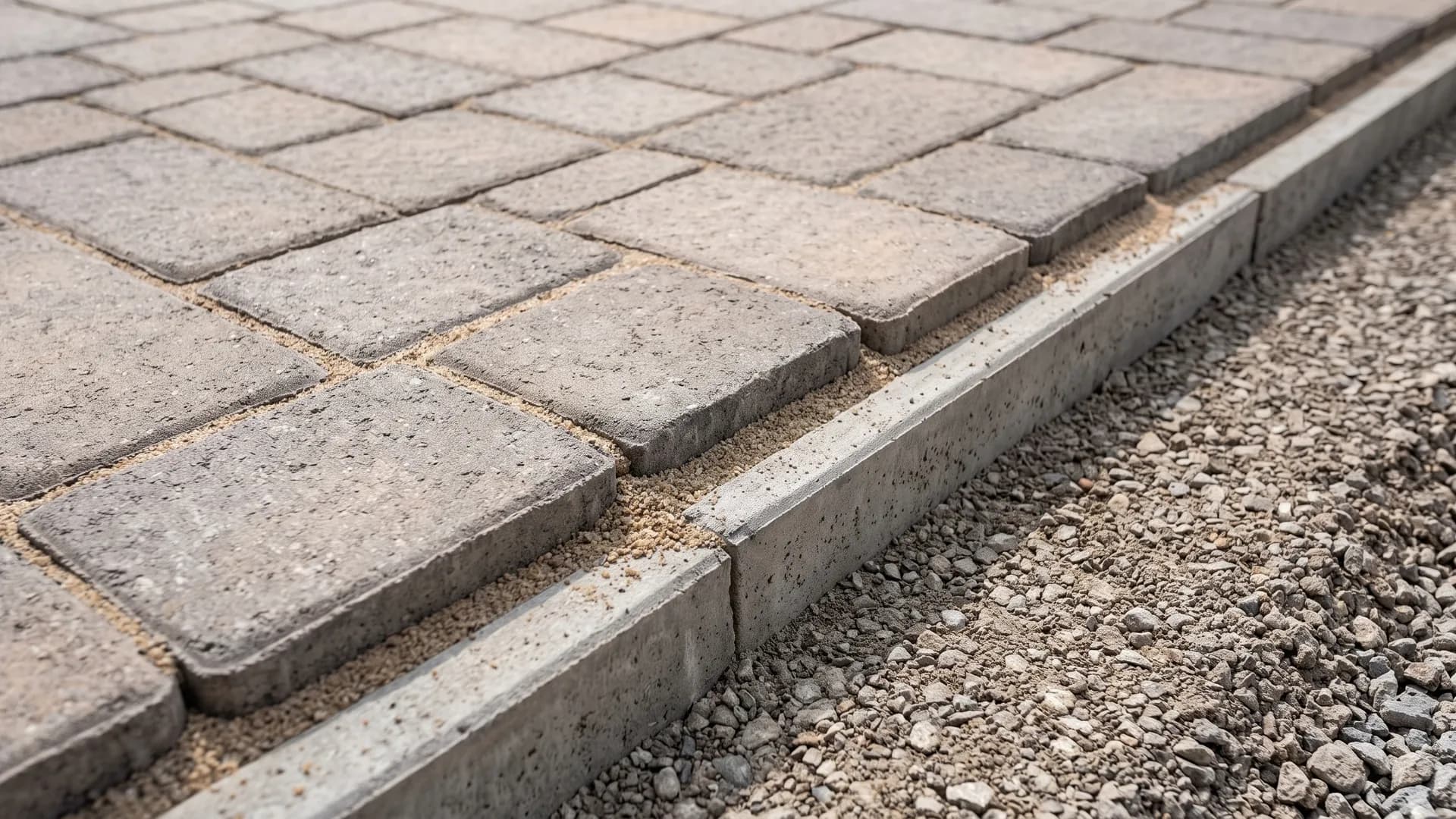
The third mistake is the one that spreads. Without a solid edge restraint locking the perimeter in place, the pavers slowly migrate outward under repeated load, opening gaps, loosening the pattern and letting the whole field drift. A driveway can have a perfect base and still fail at the edges if nothing holds them.
Proper edge restraint, correctly installed and properly backed against the base, is what keeps the field tight and true for years rather than months. It is unglamorous, it is easy to cut from a cheap quote, and its absence is one of the first things to reveal a corner that was quietly skipped. We treat it as structural rather than optional, because a spreading edge undoes everything the base did right.
The Aftercare Mistakes That Undo Good Work
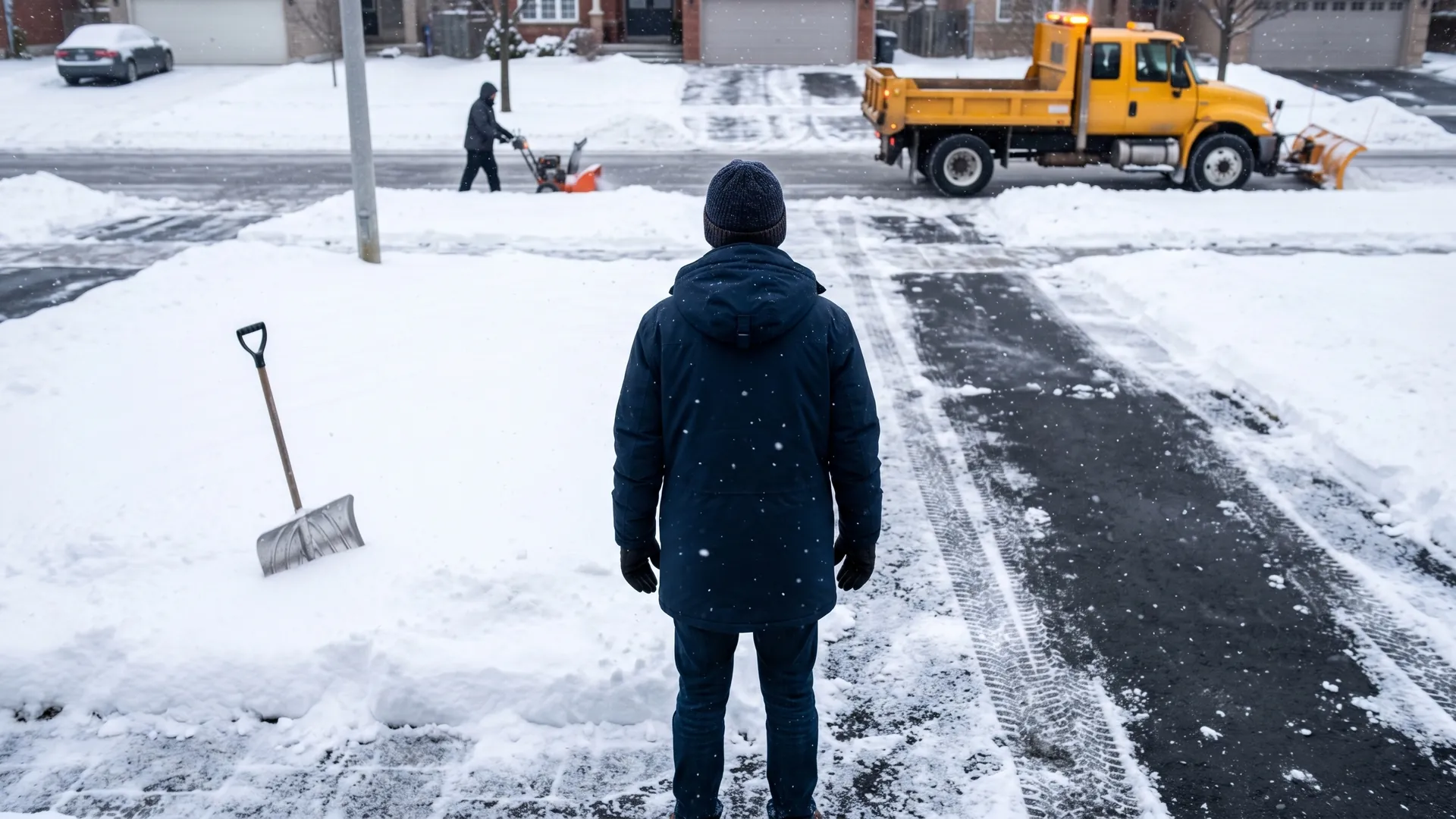
Not every failure is the builder’s. Even a superbly built driveway can be damaged by rough winter clearing, by a plow blade set too low catching an edge course, or by heavy salting that pits the stone and harms the joints over time. The maintenance mistakes are just as capable of shortening a driveway’s life as the construction ones.
Keeping the joints properly filled with polymeric sand, clearing snow with care, and going easy on the salt are the small habits that protect the investment, all of which we cover in our guide to caring for your interlocking driveway. Avoiding interlocking driveway mistakes is really a partnership, a driveway built well and then treated as though it was meant to last, since even flawless construction can be undone by a careless first winter.
Every one of these failures is cheaper to prevent than to repair, and none of them shows on the day the work is done, which is exactly why they persist. If you want a driveway built to avoid all of them from the ground up, tell us about your project.