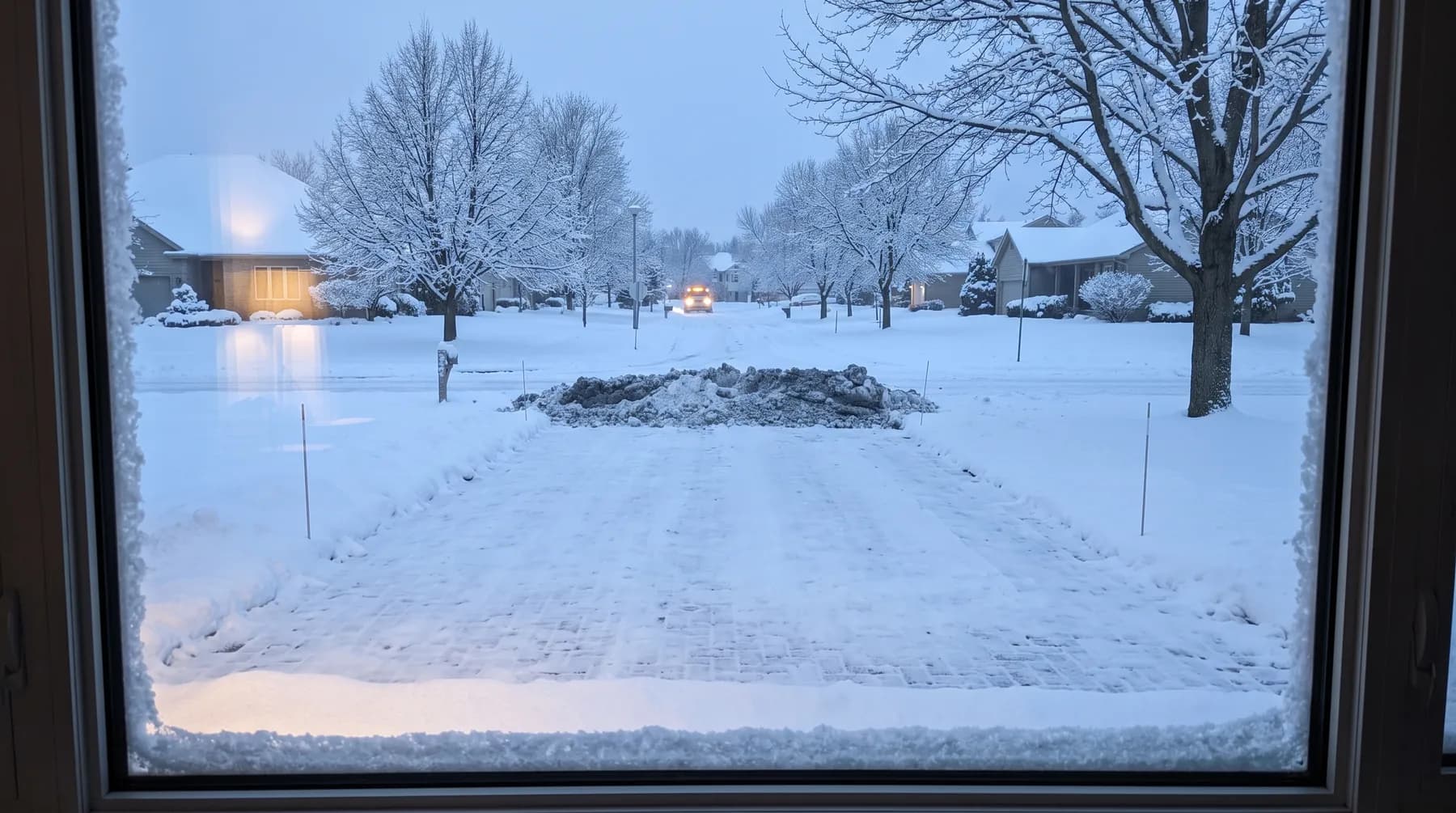

Every year the same quiet drama plays out across the region. Autumn is mild, the driveway is clear, winter feels theoretical, and the phone stays in the drawer. Then the first real storm lands, every homeowner reaches for the phone at once, and the good contractors are already full. The single most useful thing to understand about a snow removal contract is that the right time to sign one is well before you feel any need to.
Timing is genuinely the whole game here. Get it right and the winter is calm. Get it wrong and you spend December negotiating from a position of weakness.
Why the Deadline Is Earlier Than You Think
Contractors build their winter routes in advance, and those routes have a fixed capacity. Every property added to a loop takes time, and once a loop is full it is full, regardless of how much you are willing to pay in January. This is why a snow removal contract is not a service you can reliably arrange on demand. You are not just buying clearing, you are buying a guaranteed place on a route that stops accepting new addresses once it fills.
Late summer and early autumn is the sensible window. That is when routes still have room, when you can compare providers without the pressure of an incoming storm, and when the contractor covering these communities can still fit your street into the plan.
By late November the good operators are already turning people away, and the ones still accepting new addresses in December are often the ones you would rather not depend on. This is the same logic that governs snow removal capacity every single year, and it never changes no matter how mild the autumn happens to feel.
What a Snow Removal Contract Should Actually Cover
Not all contracts describe the same service, and the differences are where winter arguments begin. Before signing, settle exactly what is included. Is it the driveway only, or are walkways, steps and the path to the side door part of the deal? What triggers a visit, and at what depth does clearing begin? Is salt included, billed separately, or not offered at all?
Then read how you are charged. A seasonal contract is a flat fee for the winter, which means a mild year costs a little more than it might and a heavy year costs far less, while guaranteeing your spot on the route regardless of how the season turns out. Per visit pricing can look fairer but often places you behind contracted clients when snow falls, because they are obligated and you are optional. Neither model is wrong, but knowing which you are signing, and what defines a storm within it, prevents the surprise that arrives with the first invoice.
The Protections Worth Confirming in Writing
A contract is also where you confirm the things that matter when something goes wrong. Ask for proof of liability insurance, because damage caused on your property by an uninsured operator becomes your problem to resolve rather than theirs. Confirm the expected response time after snowfall stops, and confirm what happens during a major storm when every client needs service at once.
It is also worth establishing how the contractor protects the property itself, whether they stake the driveway edges before the first snow so a blade never finds a garden bed or a stone border in the dark. A contractor who also handles the property in the warmer months through seasonal maintenance already knows where those edges are, which is a quiet advantage worth having. Getting these points into the written agreement, rather than leaving them to a friendly verbal understanding, is what makes the contract worth signing at all.
Signing a Snow Removal Contract With Time to Spare
The homeowners who sail through winter are, almost without exception, the ones who signed early. They chose their provider calmly, compared what was actually included, secured a guaranteed spot on the route, and got every detail in writing before a single flake fell. They are not the ones standing at a window after the first storm, phone in hand, working through a list of contractors who are already full.
A snow removal contract signed in autumn is one of the least glamorous and most rewarding decisions of the year. It costs nothing extra to act early, and it buys a whole winter of not thinking about it. If you would rather settle this now than gamble on December, reserve your spot for the season while the routes still have room.