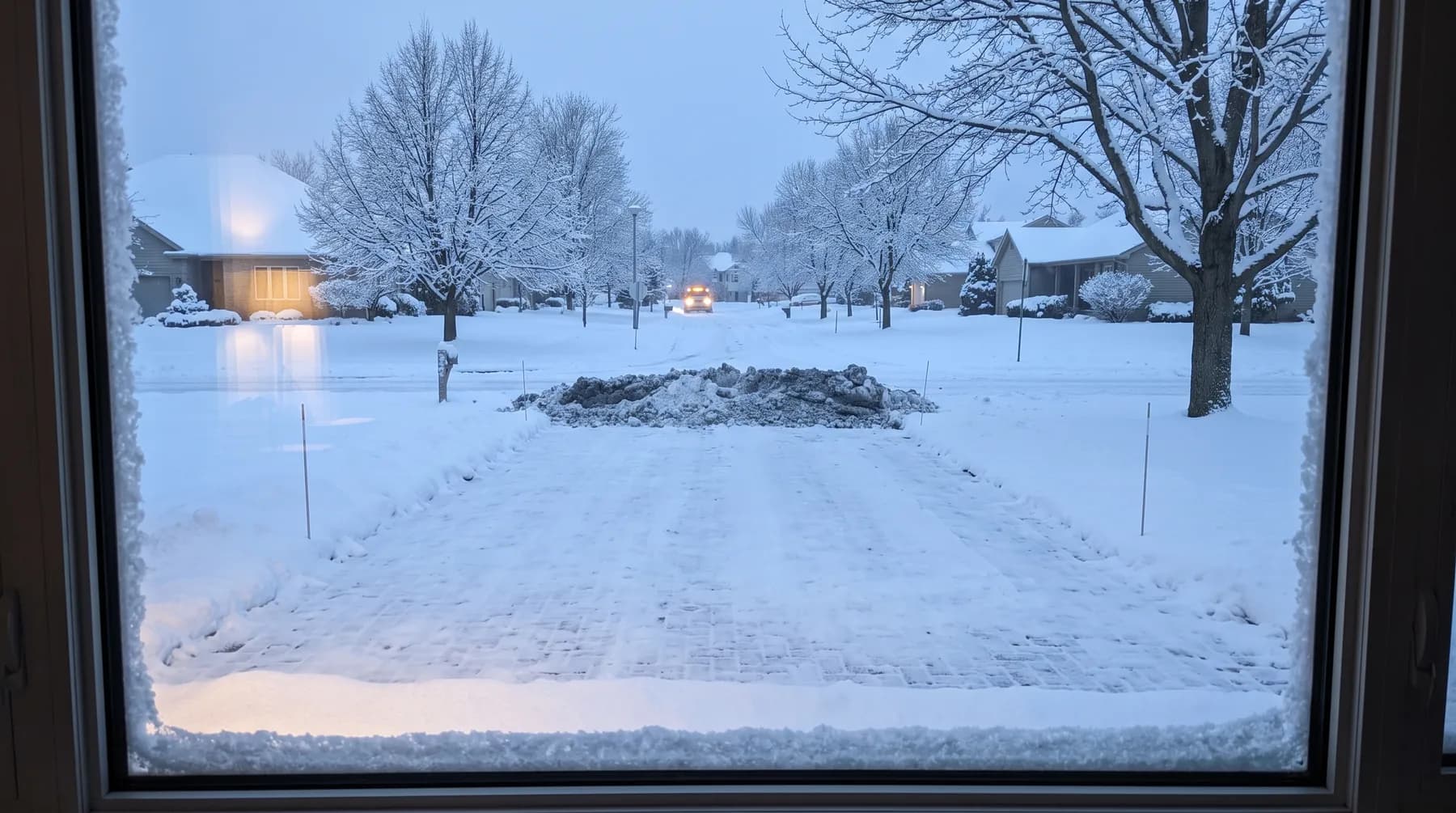

The two phrases get used interchangeably in conversation and in quotes, which is exactly how homeowners end up surprised in January. Snow plowing vs snow removal is not a matter of vocabulary. They describe two genuinely different services, with different prices, different equipment and very different outcomes on a small property.
Knowing which one you are actually buying is the whole point.
What Plowing Actually Means
Plowing moves snow. A blade pushes it from where it is a problem to where it is not, and the job ends when the surface is passable. On a driveway that means the snow is now sitting in a bank along the edge, at the end, or across a section of lawn.
For most properties that is entirely sufficient, and it is what the majority of residential contracts provide. It is fast, it is affordable, and through an average winter the banks simply melt down between storms. The service is judged on speed and on whether the operator cleared right to the edges and up to the garage door rather than leaving a strip behind.
What Full Snow Removal Includes
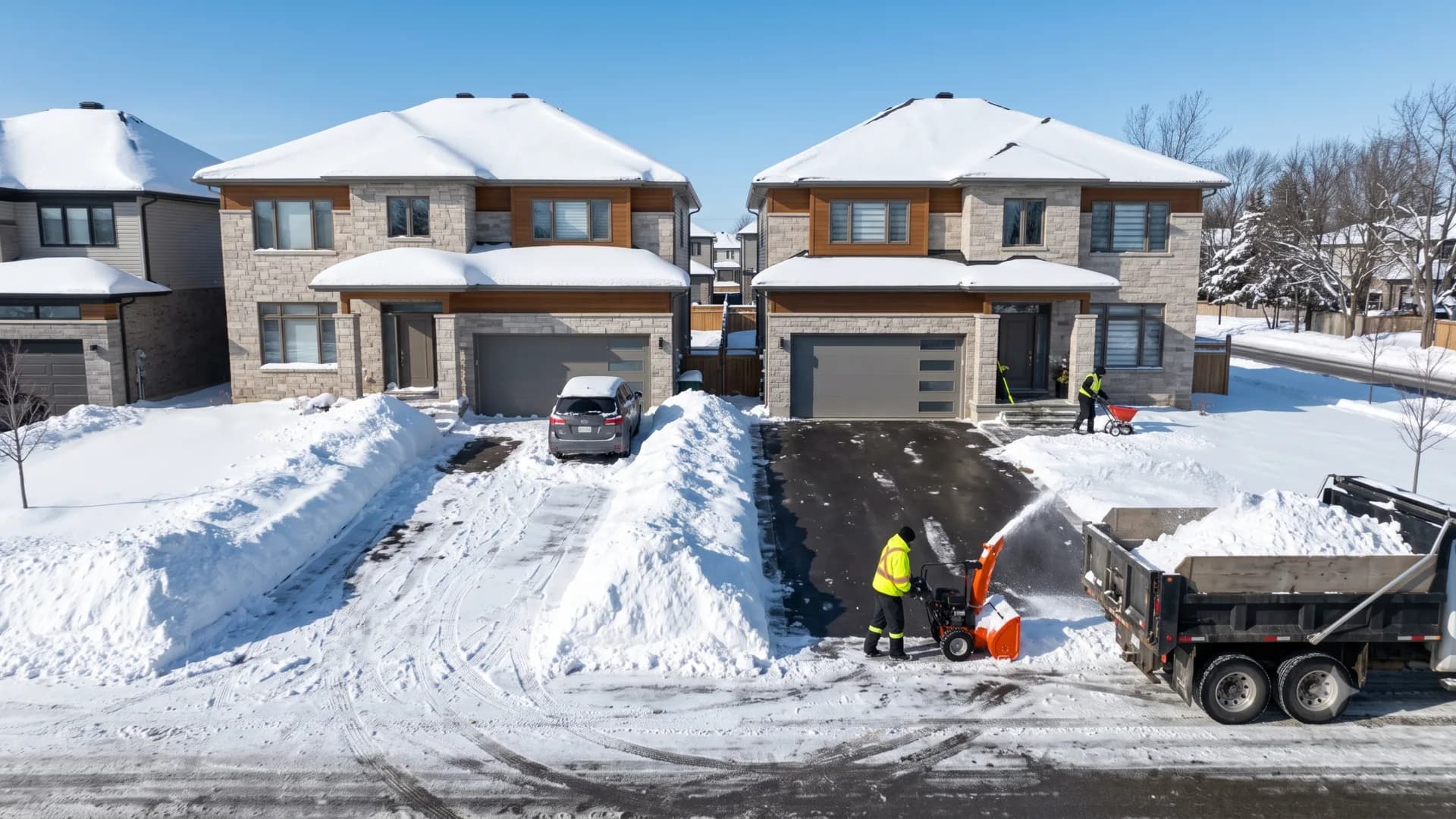
Removal means the snow leaves. It is loaded and hauled off the property, or blown well clear of the areas that need to stay usable. On commercial sites this is routine by midwinter. On residential properties it becomes necessary when there is simply nowhere left to put it.
Full snow removal usually also covers what plowing does not. Walkways, steps, porches, the path to a side door, and clearing around parked vehicles. It normally includes salting or an alternative traction material, applied where people actually walk. It costs more because it takes longer and often requires a second machine on site.
There is a middle option that suits many homeowners and rarely gets offered unless it is requested. Snow is plowed as usual through most of the season, with removal booked only after the storms that genuinely overwhelm the property. It costs far less than a full removal contract and it avoids the February problem of having nowhere left to push. If your driveway is short or your frontage is tight, ask whether a contractor will price that arrangement.
When Pushing Snow Stops Being Enough
On certain properties the snow plowing vs snow removal question answers itself, because they reach the limit of plowing early. Short driveways with no lawn to receive the banks run out of storage after two storms. Corner lots and properties on municipal routes receive the ridge left behind by the city plow, which is dense, heavy and always arrives after you have already cleared.
Steep driveways and those with retaining walls or planted borders are another case, since pushing snow hard against a wall or into a bed causes damage that surfaces in April. So does careless plowing across interlocking driveways, where a badly set blade can catch an edge course and lift it. On any of those properties, the extra cost of removal is usually cheaper than the repairs it prevents.
Sightlines are the quieter argument for removal. Banks piled at the end of a driveway grow steadily through the winter, and by February they can block the view of the street entirely when you are reversing out. On a corner lot or a busy road, that becomes a safety issue rather than an inconvenience.
Reading a Quote for Snow Plowing vs Snow Removal
Ask four things before signing anything. Does the price cover the driveway only, or walkways and steps as well? Is it charged per visit, per storm or as a flat seasonal rate, and what exactly defines a storm? Is salt included, and where is it applied? And what is the trigger depth and expected response time once snowfall stops?
Then ask the question almost nobody asks. Where does the snow go? If the answer is that it will be pushed to the side of the driveway, you are buying plowing, and you should be satisfied that your property has room for that by February. If it needs to leave the site, say so before the contract is written rather than in the middle of a storm. Homeowners across Markham run into this most often on newer subdivisions where lots are narrow and frontages are tight.
Neither service is better than the other. Plowing is the right answer for most driveways and removal is the right answer for the ones that run out of room, and the only real mistake is paying for one while expecting the other. Tell us about your driveway and we will tell you plainly which one it needs.