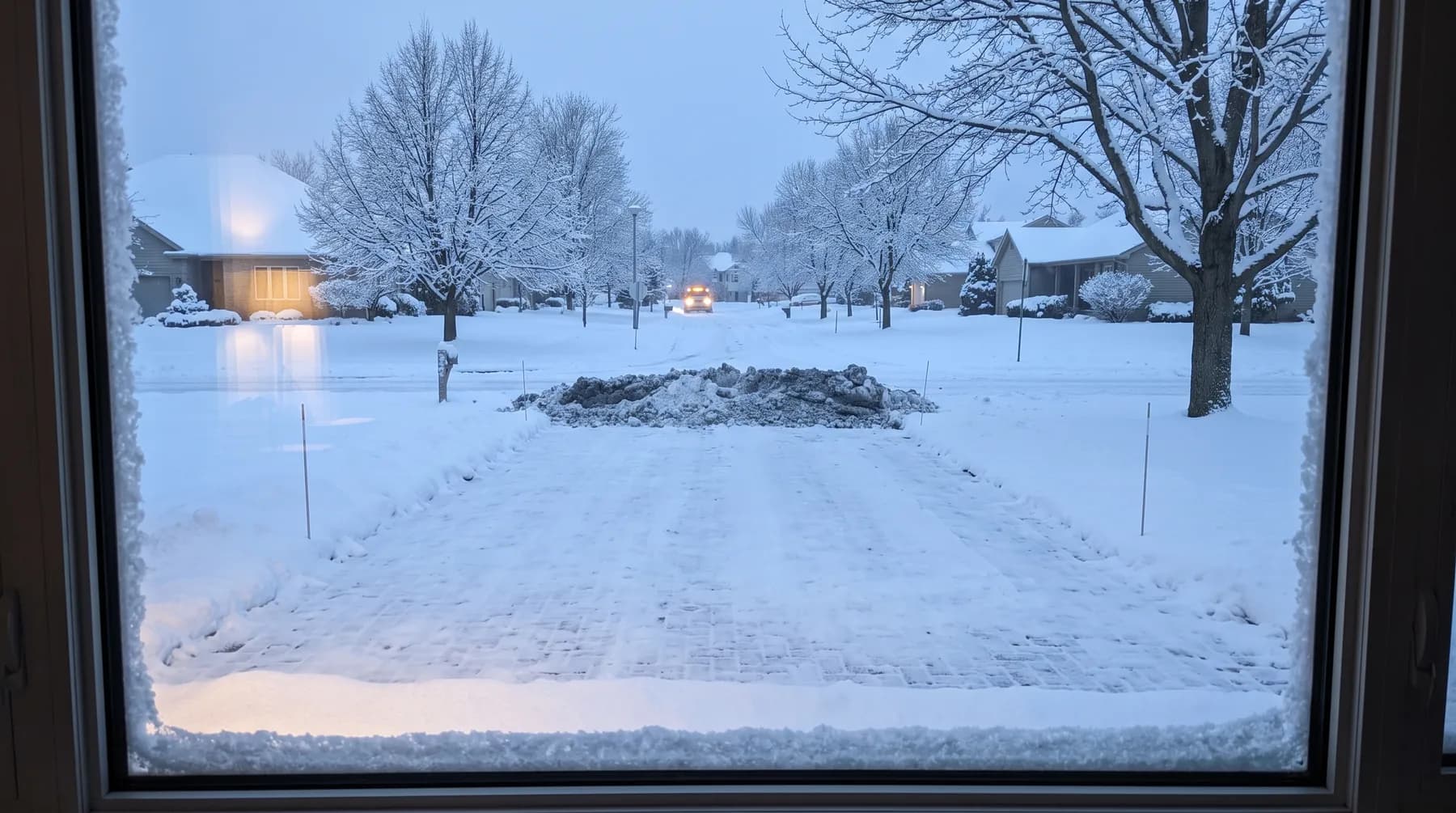

To a homeowner watching a plow go past at four in the morning, snow clearing looks like a single service delivered at different sizes. It is not. Residential and commercial snow removal are built on different obligations, different equipment and, most importantly, very different consequences when something goes wrong.
Understanding that distinction matters whether you are a homeowner wondering why a quote seems high, or a property manager wondering why the cheapest bid on the table should worry you.
Scale Changes Everything About the Schedule
A residential driveway takes minutes. A crew running a route can service dozens of properties in a single morning, and the standard expectation is that your driveway and walkway are clear before you need to leave for work.
Commercial snow removal answers to a different clock entirely. A plaza, a condominium or an industrial yard usually needs to be passable before staff and customers arrive, which means clearing overnight and then returning through the day as snow continues to fall. Many commercial contracts specify a trigger depth, often around five centimetres, at which service begins automatically without anyone making a phone call. That difference alone reshapes how a company staffs an entire winter, and it is why our snow removal service treats the two as genuinely separate operations.
Liability, Records, and Why Commercial Sites Document Everything
This is the real divide. If a homeowner slips on their own walkway, it is a bad morning. If a customer slips in a commercial parking lot, it becomes a legal matter, and the first question asked is when the site was last serviced and salted.
Serious commercial contractors therefore log everything. Arrival and departure times, conditions on site, quantity of salt applied, and photographs of the finished lot. Those records are the property manager’s defence, and they are worth considerably more than the price difference in the quote. Residential work carries none of that documentation burden, which is a large part of why it costs less per visit.
Insurance follows exactly the same pattern. Commercial work requires substantially higher liability coverage, and any contractor bidding on a commercial site without it is quietly transferring that risk to the owner. Ask to see certificates. Every legitimate operator expects the question and has the answer ready.
The reporting expectation is different too. Most commercial property managers want a written summary after each event, and many want it available the same day. Residential clients almost never ask for anything beyond a clear driveway.
Equipment Suited to the Property
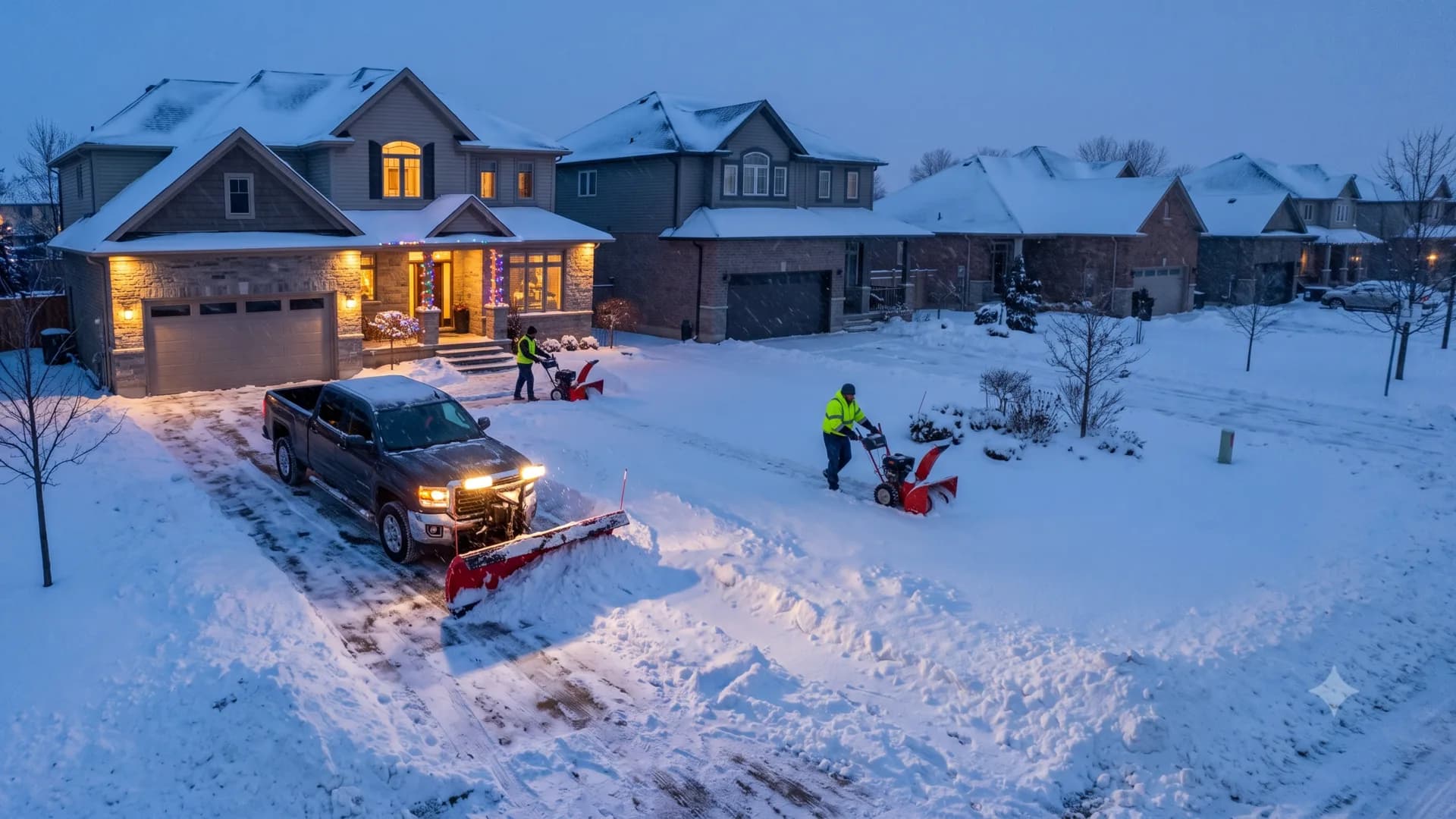
Residential routes run on trucks with plows, compact tractors and blowers, sized to fit driveways and to work without damaging interlock, edging or garden beds. A skilled operator on a residential route is protecting your property as much as clearing it.
Commercial sites call for larger equipment. Loaders with pushers, sanders and salters, and often a designated place to stack snow that will not consume half the parking spaces by February. On tight urban sites the snow eventually has to be hauled away entirely, which is a service most homeowners never need to think about. Matching equipment to the property is why coverage matters so much, and we service these communities with the right machines for each type of site.
Timing of salt is another operational difference. On a residential driveway, salt is generally applied once at the end of the clearing. On a commercial site, salt and sand may go down several times through a single event, before the snow arrives to stop it bonding, again after clearing, and once more if temperatures fall sharply overnight and refreeze a wet lot. That schedule is a large part of what separates the two prices.
Choosing Between Residential and Commercial Snow Removal
If you are a homeowner, ask about your position on the route, whether walkways and steps are included, what happens after the municipal plow leaves a ridge across the end of your driveway, and whether salt is included or billed separately.
If you manage a commercial property, ask about trigger depth, response time, documentation, salt supply during a shortage, and what happens when a machine fails in the middle of a storm. Then confirm insurance in writing. Many commercial clients also carry the same contractor through the summer, since seasonal property maintenance is far simpler under one relationship than under four.
The difference is not really size. It is obligation. A residential contract buys convenience, and a commercial contract buys risk management, and the pricing on both reflects exactly that. Talk to us about your property and we will scope it honestly for the winter ahead.