Stone is the most permanent material in any yard. Plants can be moved, mulch is replaced every couple of seasons, and a lawn can be torn out and started again. Stone stays. It also carries the largest share of the budget on most projects, which makes it the decision most worth understanding properly before anyone quotes on it.
The category called landscaping stones covers everything from a decorative pebble to a two tonne boulder, and the differences between them are not cosmetic. Each material exists to do a particular job.
The Families of Stone and What They Are For
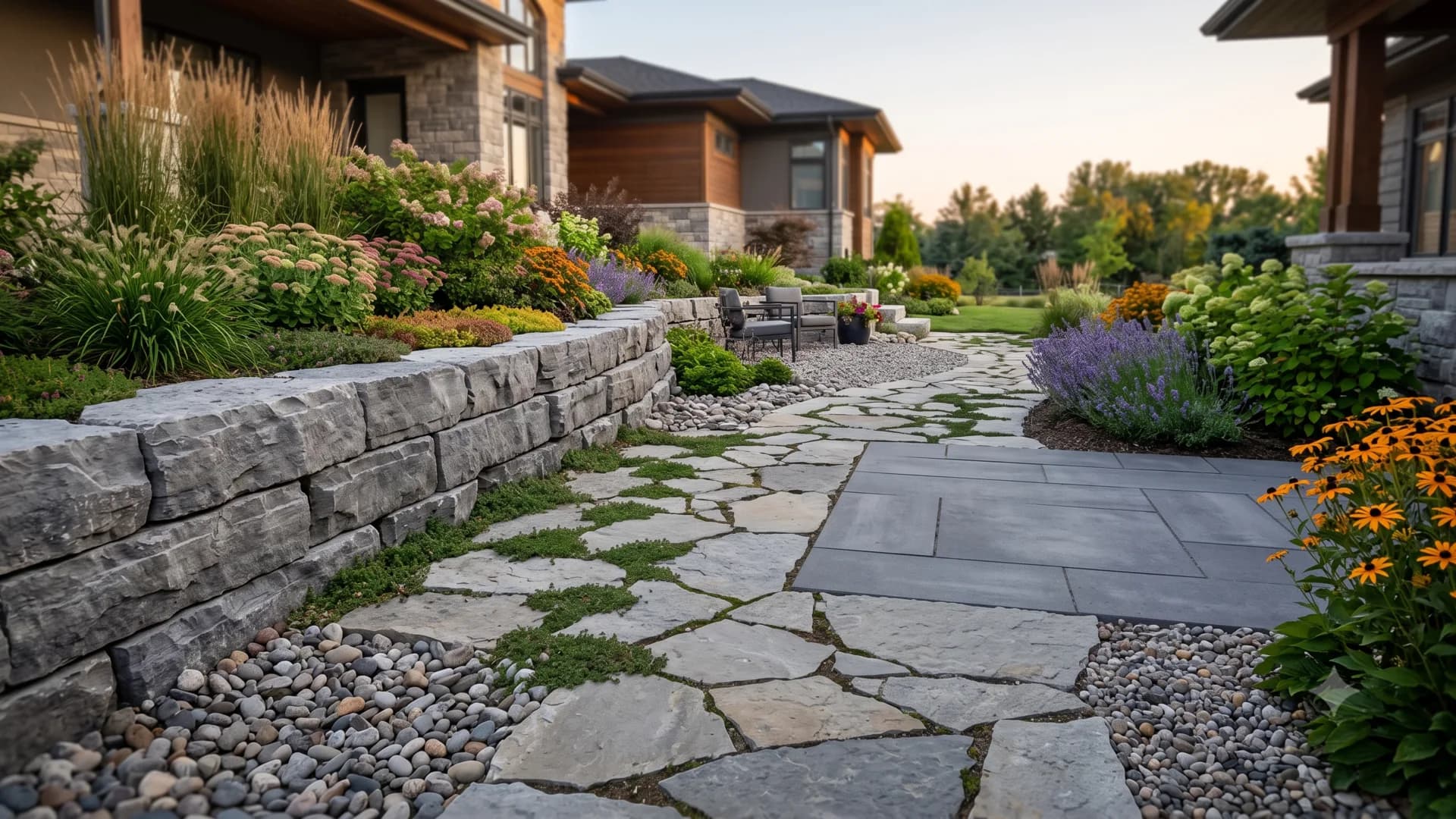
There are four broad groups. Manufactured pavers and slabs are concrete units produced to consistent dimensions, used for driveways, patios and walkways wherever a flat, level and predictable surface is required. Natural flagstone is quarried and then split into irregular or cut pieces, used where character matters more than uniformity.
Wall and armour stone is structural. It retains grade, holds slopes and builds seating or steps. Loose aggregate covers everything spread or poured, including gravel, river rock, screenings and crushed stone, most of which lives under the finished surface rather than on top of it. Choosing between these families is rarely a matter of taste alone, and it is one of the first things resolved during landscape design.
Flagstone, Armour Stone, and Natural Character
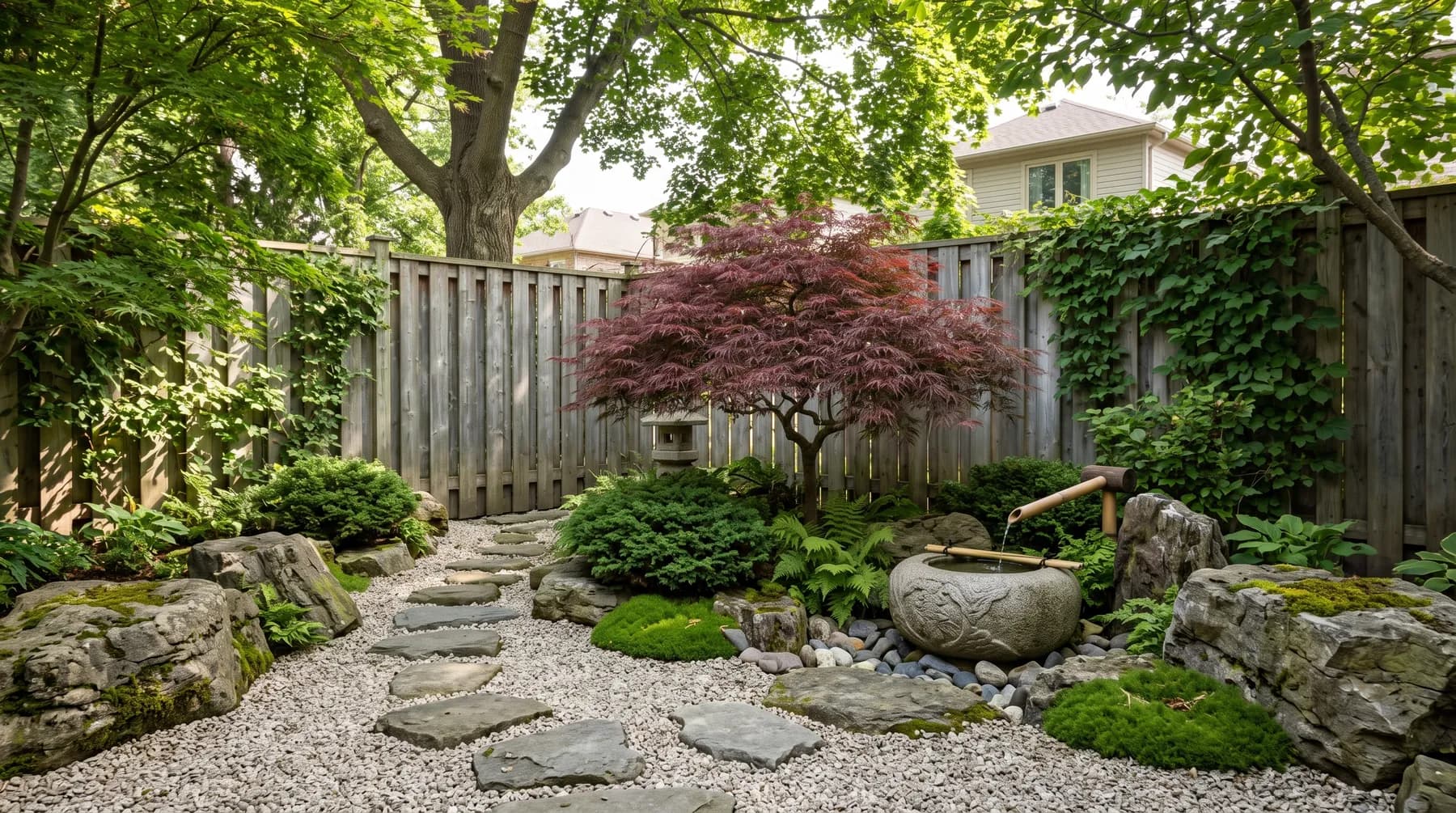
Of all the landscaping stones on offer, natural stone is where most people fall in love. Flagstone laid with wide joints and creeping ground cover between the pieces has a softness no manufactured product quite reproduces. Random flagstone is the most informal option available, while cut flagstone in regular rectangles delivers a formal, quiet surface that suits contemporary houses beautifully.
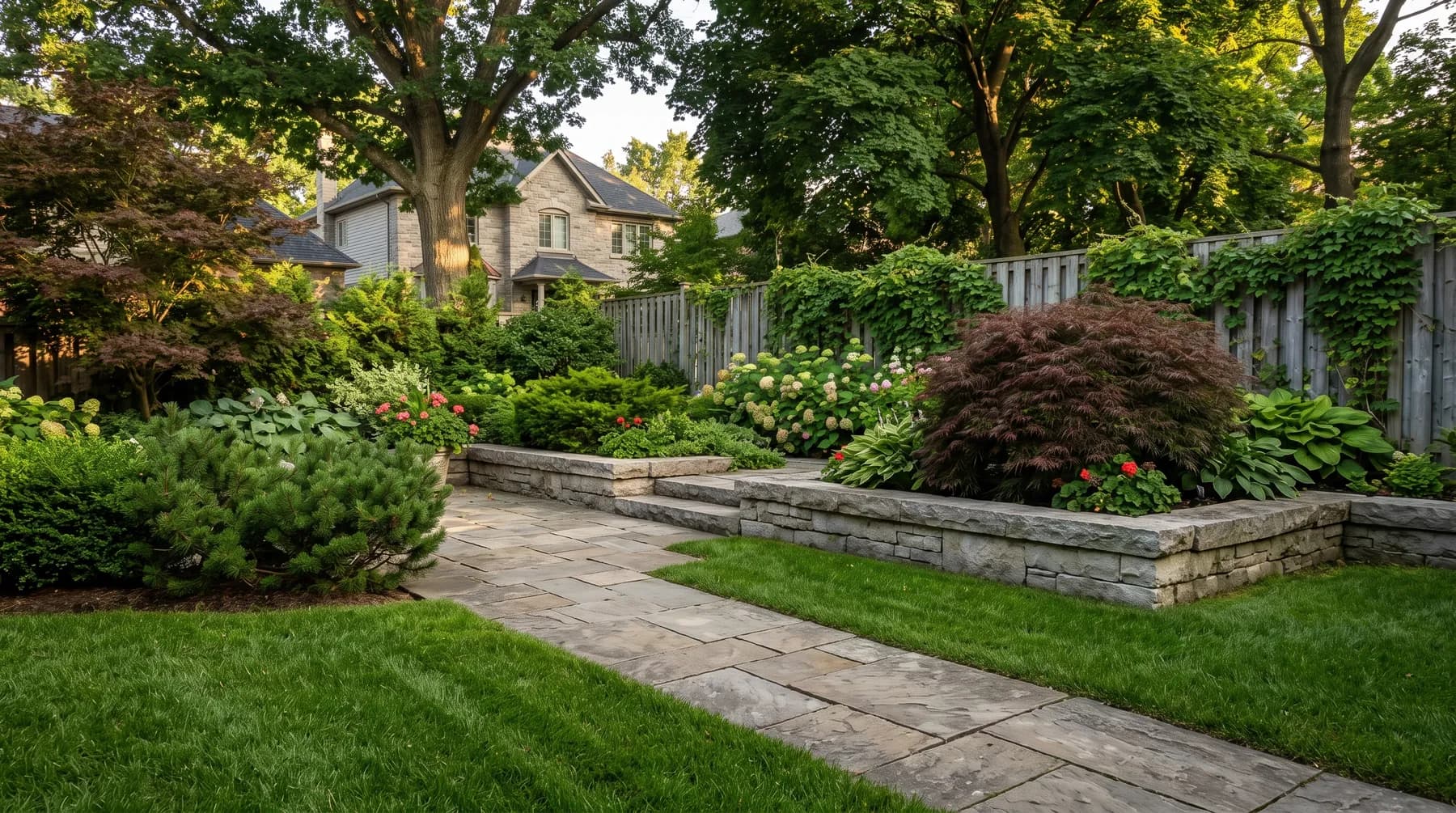
Armour stone is the workhorse of grade change. Large quarried blocks with one flat face, set into a compacted base, hold a slope permanently and read as though they had always been part of the landscape. On sloped properties they frequently do the structural work that makes the rest of a backyard construction project possible at all.
The tradeoff with natural stone is variability. Thickness differs piece by piece, which makes installation slower and considerably more skilled, and that labour shows up in the price long before the material itself does.
Aggregate, Gravel, and the Work You Never See
The least glamorous stone matters the most. Under every patio, walkway and driveway sits compacted granular base, and its depth and compaction determine whether the surface above stays flat through a decade of freezing and thawing. It is entirely invisible, which is exactly why it is the first thing trimmed out of a cheap quote.
Above ground, river rock and decorative aggregate handle drainage swales, dry creek beds, side yards where grass simply refuses to grow, and beds where you would rather not top up mulch every spring. They are practical materials that happen to look good, rather than the other way around. The same principle governs the base beneath our interlocking driveways, where depth is never negotiable.
What Landscaping Stones Cost and Where the Money Goes
Pricing surprises homeowners because the material is rarely the largest number on the page. Manufactured pavers sit at the accessible end and are efficient to install. Natural flagstone costs more per square foot and considerably more to lay, because every piece is fitted individually by hand. Armour stone is priced by weight and requires equipment to place, so access to the site affects the total as much as the stone does.
Aggregate is cheap by the tonne and expensive by the hour, since excavation, haulage of the old material and compaction in layers all take real time. As a rough guide, expect labour and preparation to account for the majority of any stone installation, and be skeptical of any quote where material dominates the total. That usually means the preparation underneath is thin.
Delivery and disposal are the two line items homeowners most often forget. Stone arrives by the pallet or by the tonne and all of it has to be trucked, and every square foot of new surface usually means an existing surface leaving the property first. On a typical residential build, removal and haulage of the old material can rival the cost of the new stone going down. Ask for both figures separately so you can see where the money is genuinely going.
Stone is the part of a project you will still be looking at in twenty years. Choosing it well is worth an unhurried conversation. Tell us what you are planning and we will walk you through the options and the real costs before anything is ordered.