There is a particular kind of garden bed that gives itself away instantly. The plants are healthy, the mulch is fresh, the edging is crisp, and still the whole thing looks as though it was dropped onto the lawn rather than grown out of it. Almost always, the problem is not the planting. It is the layout, decided in an afternoon and then lived with for a decade.
A good garden bed installation begins long before anything goes into the ground. It begins with a set of decisions about shape, sightlines, scale and soil that are nearly impossible to change later without lifting everything out and starting again. Get those right and even a modest planting list will look intentional.
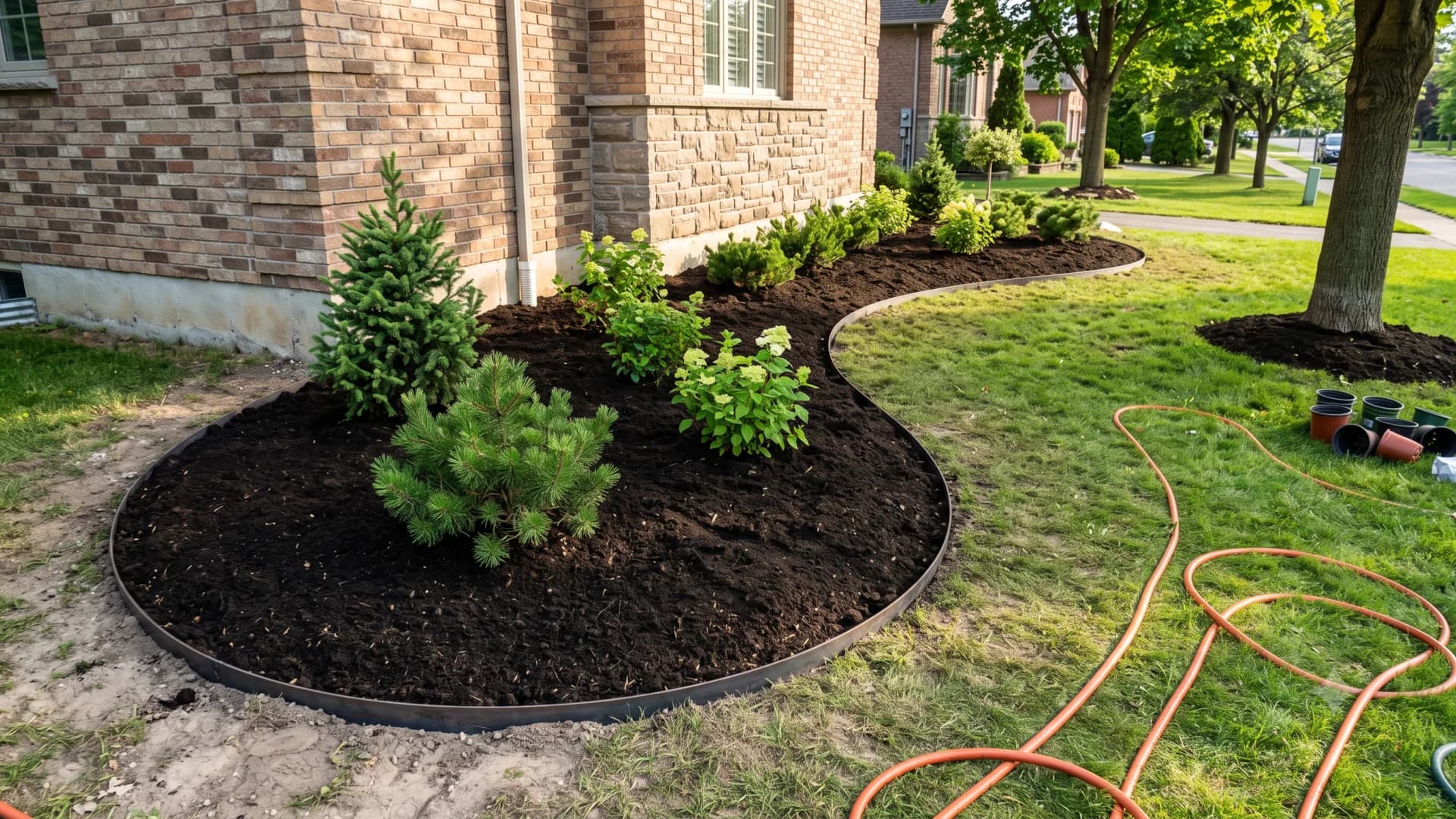
Start With How the Bed Will Be Seen
Before drawing a single curve, walk your property the way you actually use it. Where do you stand when you pull into the driveway? What do you look at from the kitchen window in February? Which view do guests get from the front door, and which one do you get from the patio chair you sit in every evening?
Beds are almost always designed on paper as though they will be viewed from above, and then experienced entirely at eye level. The difference is enormous. A bed that reads as a beautiful shape on a plan can be nearly invisible from the one angle you use most. Working out those viewpoints first is a large part of what happens during landscape design, and it costs nothing to get right at the beginning.
Shape, Scale, and the Lines That Hold a Yard Together
The most common error in residential beds is timidity. A narrow ribbon of soil hugging the foundation cannot hold plants of any real size, so it fills with small shrubs that never mature into anything, and the house ends up sitting on the lawn like a box on a carpet. Depth is what allows layering, and layering is what makes a bed look full rather than dotted.
Shape matters just as much. Long, lazy curves read as calm and generous. Tight scallops read as busy, and they quickly become a nuisance to mow around and to edge cleanly, which is something our lawn maintenance crews notice long before a homeowner does. If the architecture of the house is formal, straight lines and defined corners will often suit it far better than curves ever will.
Scale should answer to the house, not to the lawn. A two storey home needs beds with real depth at the foundation, otherwise the planting disappears against the wall behind it. A bungalow needs the opposite restraint, since an oversized bed will swallow the frontage entirely.
Soil, Drainage, and Edging Before Anything Is Planted
Nothing in a garden bed installation matters more than what sits below the mulch. Much of this region is clay, which compacts badly under construction traffic and holds water right through spring. Beds built directly onto it drown perennials in April and starve them in July. The fix is unglamorous and permanent. Excavate, amend generously with compost and quality triple mix, and build the grade so water leaves the bed rather than collecting in it.
Edging is the other invisible decision. A cut trench edge looks beautiful and needs redefining every single year. Steel or stone edging costs more at installation and then holds its line for decades while keeping grass roots out of the bed entirely. Neither answer is wrong. Choosing without knowing the tradeoff usually is.
Planning a Garden Bed Installation That Still Looks Right in Year Five
The final layout question is time. Nurseries sell plants at a convenient size, not at their mature size, and a bed that looks perfectly spaced on planting day is often a thicket by its fourth summer. Plan the layout around mature dimensions, then accept that the first two seasons will look slightly sparse, and fill the gaps with annuals rather than with permanent plants you will later have to tear out.
Structure should come first in the plan and be planted first on the site. Anchor shrubs and small trees set the bones, evergreens carry the bed through winter when everything else has gone, and perennials fill in between them. Our tree and shrub planting work almost always begins with those anchors for exactly that reason.
Layout is the cheapest part of the job and the part that quietly determines everything else about it. If you are looking at a stretch of lawn and trying to picture what belongs there, send us the details and we will help you plan it properly before anyone picks up a shovel.